
OPINION
By Dele Kuti, Global Head, Energy at Standard Bank Corporate & Investment Banking
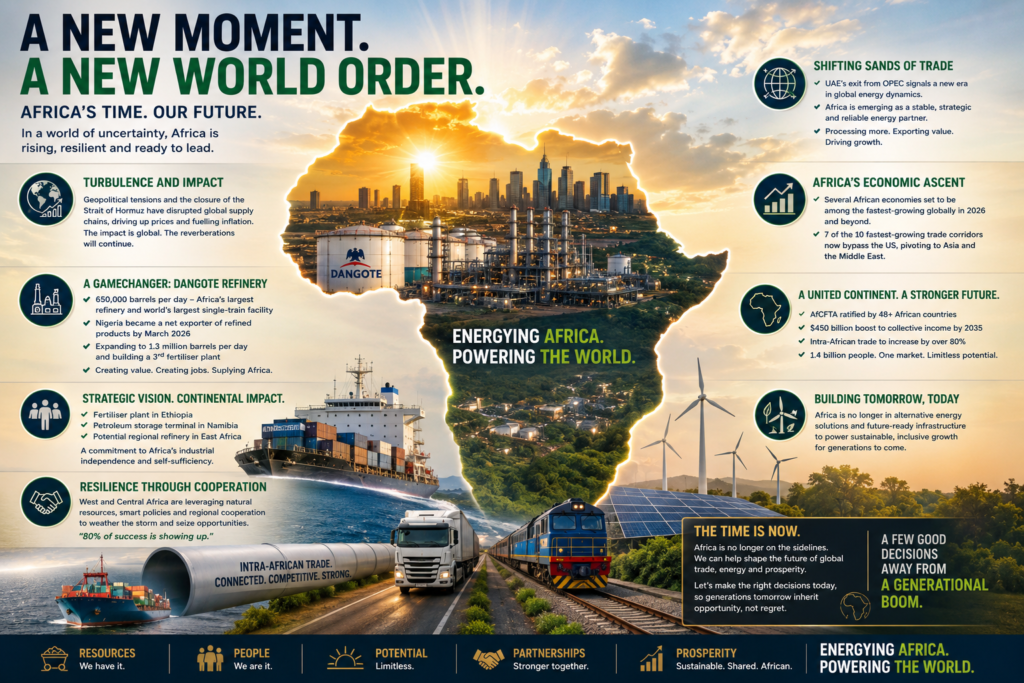
As we approach the second half of the year, it is important to reflect on the busy first half. After a hectic 2025, most observers would have expected some form of respite. Unfortunately, respite will not likely be a word associated with the half of the year 2026.
The oil and gas and the broader energy sector, an industry I have worked in for decades has seen some of the worst turbulence, as prices react to the conflict and geopolitical tensions in the Middle East.
This turmoil has inflicted unintended knock-on adverse impacts on the price and availability of key energy products and important goods and services such as fertilizer, shipping and logistic services as a result of the closure of the Strait of Hormuz. From an inflation monitoring perspective, we have gone from anticipating interest rate cuts, to predicting increases to curb the impacts on the population and protect the value of the ZAR. The protagonists of the ongoing conflict may be limited in number, but the impact of their clash has been widespread, and its reverberations are sure to continue for a while to come.
The Case For Diversification, The Path to a New World Order
As uncertainty on the length and nature of the Middle East conflict continues, investors and discerning value-chasers are searching for sure footing with predictable outcomes. One of the major beneficiaries of the unintended conflict has been the Dangote Petroleum Refinery and Petrochemical Company
The Dangote Refinery has emerged a gamechanger, having taken advantage of the opportunities presented by the conflict. Officially opened in January 2024, Dangote Refinery has an installed capacity of 650,000 barrels of oil per day(bodp), the refinery represents Africa’s biggest refinery and the world’s largest single-train facility
The Dangote Refinery has reportedly increased production and supply given the increase in global demand, thereby making Nigeria a net fuel exporter of refined petroleum as of March 2026, especially the much-needed aviation /jet fuel which in high global demand to various destinations including west African countries and Europe. Plans are underway to double the capacity of the refinery to 1.3 million barrels per day processing capacity and a third fertilizer plant.
We must hail the strategic vision of the sponsors of this and similar projects, by celebrating their courage, resilience and grit. As a result of the success of the Dangote refinery, Dangote Group is now building a fertilizer plant in Ethiopia, a refined petroleum storage terminal in Namibia and potentially a regional refinery in East Africa all centered around supplying Africans with their daily needs.
Through a mixture of natural endowment and clever policy formulation including regional cooperation, countries in West and Central Africa have been able to weather the current storm of refined products availability. The countries have placed themselves at the forefront of taking advantage of the turmoil in developed markets. In times of uncertainty, these are valued traits that should not be taken for granted. As a famous adage goes, “80 percent of success is showing up.”
The current situation has created conditions that make it possible to imagine a new world order. In this light, Africa has become attractive to the global investment community as a stable source of energy and related infrastructure empowering the world
Shifting Sands of Trade
The current situation has created conditions that make it possible to imagine a new world order. In this light, Africa has become attractive to the global investment community as a stable source of energy and related infrastructure empowering the world. In the past few weeks, we saw the United Arab Emirates (UAE) announce their departure from the Organization for the Petroleum Exporting Countries (OPEC), an organization they helped build up. This is a groundbreaking event that could potentially have longer term implications for energy pricing especially crude oil.
In this climate of ever shifting geopolitical sands, Africa is well positioned to take advantage of these developments by developing its natural resources and processing same on the continent, thereby driving economic growth in the continent. According to various surveys, including International Monetary Fund‘s World Economic Outlook Update: Global Economy: Steady amid Divergent Forces, several African economies are expected to rank among the fastest‑growing globally in 2026 and the years ahead. According to Standard Bank‘s own B20 Leadership Perspectives seven of the ten fastest-growing trade corridors now bypass the United States, pivoting instead toward Asia and the Middle East.
This shift and development have been ably aided by regional cooperation through the pioneering effort of the African Continental Free Trade Area (AfCFTA). Ratified by more than 48 African states, AfCFTA is expected to raise collective income by US$450 billion by 2035 and increase intra-African trade by over 80 percent. This will service a burgeoning population of 1.4 billion people and offer a viable alternative to ructions we have seen from previously predictable global policy points such as tariffs and free trade agreements.
The African continent has long played a secondary role in shaping global events, energy being one of the main characteristics of the sedentary role. We, now, can play a role in helping to choose the direction of global decision making. We cannot afford to waste this chance of building a platform for future generations and accelerating investments to alternative energy solutions for the continent.
I have the privilege of working for a 164-year-old startup that has nailed its colors to the mast of Africa’s development. I share wholeheartedly in the belief that we are a few good decisions away from a boom in integrated growth. This confluence of events is rare and we dare not squander the opportunity they present lest future generations look back on our time as a time of missed opportunity.
This article was written exclusively for the Africa Bazaar magazine