
By Kemi Osukoya | GLOBAL ENERGY
As governments and investors scramble to secure enough electricity for an artificial intelligence-driven and increasingly electrified global economy, a new coalition backed by some of the world’s most influential philanthropic institutions is betting that nuclear energy is moving from the political margins into the center of the clean-energy debate.
At the Philanthropy Asia Summit in Singapore this week, part of Ecosperity Week, The Rockefeller Foundation and Temasek Trust announced the launch of the Global Coalition for Nuclear Philanthropy, an initiative designed to mobilize philanthropic capital in support of nuclear energy as a source of clean power, economic development and long-term energy security.
The effort reflects a broader shift underway in global energy markets, where concerns over grid reliability, industrial competitiveness and surging electricity demand are prompting policymakers and investors to revisit nuclear power after years of hesitation.
Nuclear energy currently provides roughly 10 percent of the world’s electricity supply, with countries including China, France and the United States relying on it as part of their energy mix. Supporters argue that while solar and wind capacity are expanding rapidly, renewable energy systems alone still face structural limitations, including intermittency, storage costs and grid stability challenges.
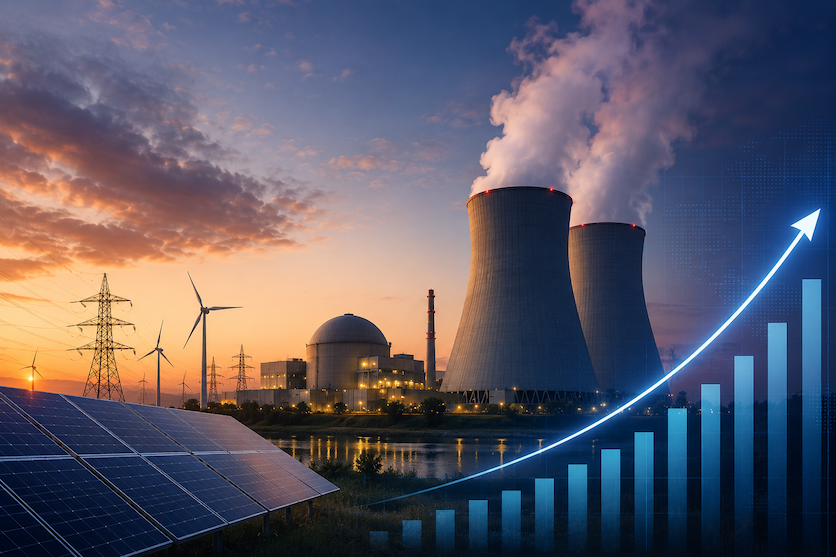
That reality has increasingly given rise to what energy executives and policymakers describe as “energy realism”—a more pragmatic approach that views nuclear generation not as a competitor to renewables, but as a complementary source of firm baseload electricity when weather-dependent power generation falls short.
The timing of the coalition is also significant for Africa, where access to reliable electricity remains one of the continent’s largest constraints on industrialization and economic growth. The Rockefeller Foundation has already been working closely with the World Bank Group and the African Development Bank on Mission 300, the ambitious initiative aimed at expanding electricity access to 300 million Africans by 2030.
While Mission 300 has largely centered on scaling grid infrastructure, distributed renewables and energy access financing, the Foundation’s growing support for nuclear reflects an emerging recognition among development institutions that long-term African industrial growth will likely require more than intermittent renewable power alone.
RELATED: EXCLUSIVE INTERVIEW WITH MISSION 300 CEO
For energy-intensive sectors including manufacturing, mining, artificial intelligence infrastructure, fertilizer production and water treatment, policymakers are increasingly focused on securing stable baseload electricity that can operate independently of weather conditions. Advanced nuclear technologies, particularly small modular reactors, are beginning to enter those discussions as African governments explore future energy diversification strategies.
Countries including Algeria, Egypt, Ghana, Kenya, Morocco, Nigeria, Rwanda, South Africa, Tanzania and Zambia have all expressed varying levels of interest in nuclear energy development in recent years, though financing, regulatory capacity and public acceptance remain major hurdles.
According to the International Energy Agency, some of the fastest growth in global electricity demand is between 2024 and 2026, driven by higher cooling needs, industrial expansion and rising digital infrastructure consumption. Meeting that demand, analysts say, will likely require a broader mix of energy technologies, including nuclear power.
Recent analysis from The Rockefeller Foundation’s 2025 research on nuclear and total system costs argues that reliable, non-emitting nuclear generation and renewable energy can reinforce one another economically at scale, rather than compete.
“Universal energy abundance— the kind that powers industries, anchors economies, and raises living standards for billions — requires firm, clean power alongside renewables,” said Rockefeller Foundation’s senior Vice President Ashvin Dayal during the summit in Singapore.
“The next generation of nuclear technologies, including small modular reactors, is advancing fast and costs are coming down, opening a real prospect that many developing and emerging economies could add safe, abundant, clean baseload power to their energy mix,” he said. “Getting there will take serious work on policy, regulation, finance, and human capital. That is precisely why we are forming the Global Coalition for Nuclear Philanthropy now.”
The coalition emerges as a wave of new nuclear technologies gains momentum globally. Companies and governments are investing heavily in advanced reactor systems, including small modular reactors, or SMRs, designed with enhanced safety features and lower construction costs than conventional nuclear plants.
Interest is also growing around fusion energy, an experimental technology aimed at replicating the same atomic process that powers the sun. While commercial fusion plants remain years away, proponents see the technology as a potential long-term breakthrough capable of delivering vast amounts of carbon-free energy with significantly less long-lived radioactive waste.
Philanthropic institutions have historically kept their distance from nuclear energy, largely because of concerns over reactor safety, radioactive waste, high capital costs and links to nuclear weapons proliferation.
According to analysis by Founders Pledge using ClimateWorks Foundation data, only 0.1 percent to 0.2 percent of climate philanthropy currently supports nuclear energy— less than $2 for every $1,000 directed toward climate-related giving.
That dynamic, however, appears to be shifting.
Growing electricity demand from artificial intelligence, manufacturing and data centers, combined with pressure to decarbonize economies without sacrificing energy reliability, has brought nuclear energy back into policy discussions across the world.
High-profile investments have also helped reshape perceptions around the sector. Billionaire Bill Gates has invested heavily in advanced nuclear technologies through TerraPower, helping drive renewed interest among investors and technology executives.
“Nuclear power is a vital clean energy source that can help address the climate crisis,” said Desmond Kuek, Temasek Chief Executive Officer.
“Through the Global Coalition for Nuclear Philanthropy, we aim to convene like-minded partners to support informed dialogue and responsible approaches to nuclear energy in upholding the highest standards of safety, security, and responsible waste management,” he added.
The coalition includes a growing network of philanthropic and policy organizations, including Blue Horizons Foundation, CleanEcon, Founders Pledge, investor Ray Rothrock and the Rodel Foundation.
The initiative also aligns with the COP28 declaration signed by more than 30 countries pledging to triple global nuclear power capacity by 2050 as part of broader net-zero targets.
The Oppenheimer Project, which helped develop the coalition from concept to launch, will serve as a strategic partner, while TT Foundation Advisors will provide donor-advised fund infrastructure and grant management support during the coalition’s initial years.
Over the next five to 10 years, the GCNP plans to focus philanthropic capital across four priorities: building public support for nuclear energy, expanding talent and institutional capacity, improving financing structures for projects and strengthening safety and governance frameworks.
The coalition will also serve as a coordination platform for donors, policymakers, researchers and industry stakeholders seeking to accelerate the responsible deployment of nuclear energy in emerging and developed markets alike.
This move signals a notable recalibration in climate finance strategy for philanthropic organizations. In the global energy sector, it underscores a broader reality increasingly shaping the energy transition debate: as electricity demand surges worldwide, the path to decarbonization may depend less on choosing between renewables and nuclear power, and more on how rapidly countries can scale both.