
WORLD BRIEFS
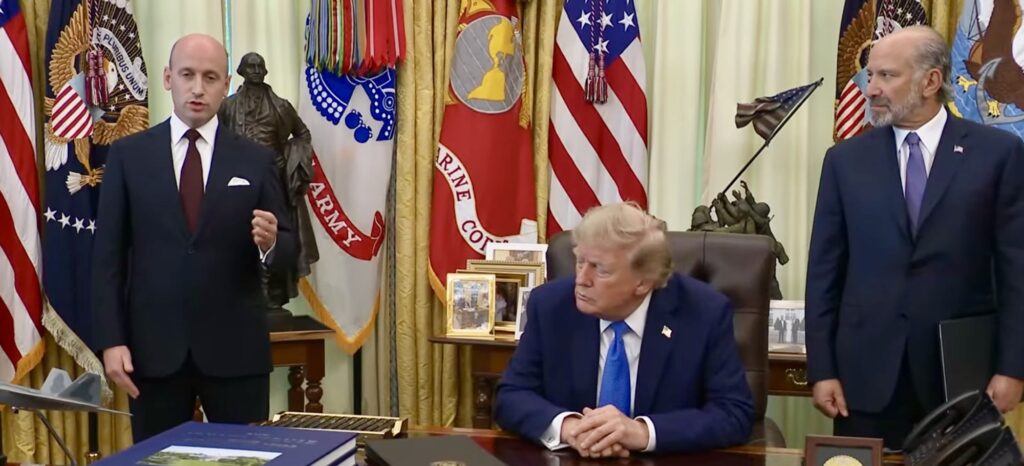
President Donald J. Trump on Thursday announced a pair of Executive Orders aimed at restricting birth tourism and expanding the categories of people who may be denied birthright citizenship, a move that could have sweeping consequences for nonimmigrant visitors, diplomats and pregnant women who unexpectedly go into labor while in the United States.
The announcement, which comes on the heel of a recent U.S. Supreme Court ruling against the President’s earlier executive order on birthright citizenship, which he had signed on his first day in office as part of his broader immigration policy, is the administration’s latest effort to work around that ruling by relying on immigration and visa-enforcement authority to accomplish some of the same goals through a different legal path.
Trump called the Supreme Court’s decision “a very, very unfortunate decision,” adding that his administration was making adjustments because, in his view, the current system is unfair.
The White House says the measures are intended to stop the organized use of tourist visas to give birth in the U.S. and secure citizenship for a child. Trump argued that the practice has become commercialized, saying, “They’re buying their way in, and we’re not gonna let it happen.”
Administration officials argue that birth-tourism operators recruit foreign nationals, advertise U.S. citizenship and public benefits as incentives, and coach clients to misrepresent the purpose of their travel to consular and border officials. Officials said the new actions would target both people believed to be traveling to the United States to give birth and the businesses or organizers that arrange those trips.
Stephen Miller, a Senior White House Adviser, described the policy in stark terms. “Birth tourism is, by definition, a fraud on the American system, on the American taxpayer, on the American visa,” he said, arguing that a visitor who claims to be a tourist while intending to give birth in the U.S. has misrepresented the purpose of the trip.
The orders rely in part on Section 215(a) of the Immigration and Nationality Act, which gives the president authority to regulate the entry and departure of citizens and noncitizens under prescribed conditions. The administration said it would use that authority to deny visas and take enforcement action against those it believes are participating in birth-tourism schemes.
But the practical effect could extend far beyond organized operations.
For women traveling on tourist, student, work or other nonimmigrant visas, the policy raises immediate questions about how immigration officials will distinguish between intentional birth tourism and a pregnancy that becomes an emergency while someone is already in the country. A woman who goes into premature labor during a vacation, business trip or family visit could face heightened scrutiny despite having no plan to give birth in the U.S..
Diplomats and their family members could also be affected, depending on how the administration defines exceptions and applies the order to foreign-government representatives. The executive order allows the Secretary of State or the Secretary of Homeland Security to grant exemptions on humanitarian grounds or when entry is deemed to be in the national interest. However, it remains unclear how consistently those exceptions will be applied in urgent medical cases.
The administration is framing the policy as an effort to protect citizenship and prevent visa fraud. Critics are likely to argue that the orders are the administration’s latest attempt to circumvent the June 30th Supreme Court’s ruling and impose, through executive action, restrictions that the courts have already rejected.
The constitutional debate on birthright citizenship centers on the 14th Amendment, which provides citizenship to people born in the U.S. and subject to its jurisdiction. Any attempt to narrow that protection is expected to face further court challenges, particularly if it affects children born to parents who entered the country legally on temporary visas.
For now, the administration’s announcement signals a more aggressive approach to visa screening and immigration enforcement around pregnancy and childbirth—one that could place nonimmigrant women, their families and diplomatic visitors under new pressure at consulates, airports and border crossings.