
HEALTH & INNOVATION
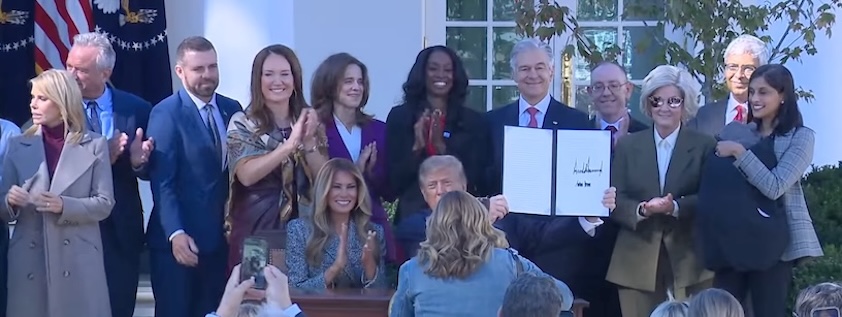
President Donald Trump on Monday signed an executive order directing the National Institutes of Health to create a division focused on women’s health within 90 days, a move that aims to address gaps in research, diagnosis, and treatments beyond women’s reproductive health, adding a new layer to federal research coordination but leaving its funding unspecified.
The initiative, championed by First Lady Melania Trump, also establishes a White House Task Force, co-chaired by Health and Human Services Secretary Robert F. Kennedy Jr. and White House Chief of Staff Susie Wiles, to coordinate policy across federal agencies.
The new NIH division is expected to work with the agency’s Office of Research on Women’s Health, which was established in 1990. The order directs the new division to coordinate research, improve the inclusion of women and girls in clinical trials, and accelerate the translation of discoveries into prevention, diagnosis, and treatment for conditions including cardiovascular disease, endometriosis, infertility, autoimmune disorders, and menopause-related conditions.
At the signing ceremony, Mrs Trump said the effort should serve women “at every stage of life, from young girls just starting out, to mothers dealing with a complex range of responsibilities, to mature women who deserve to have vitality, dignity, and independence.”
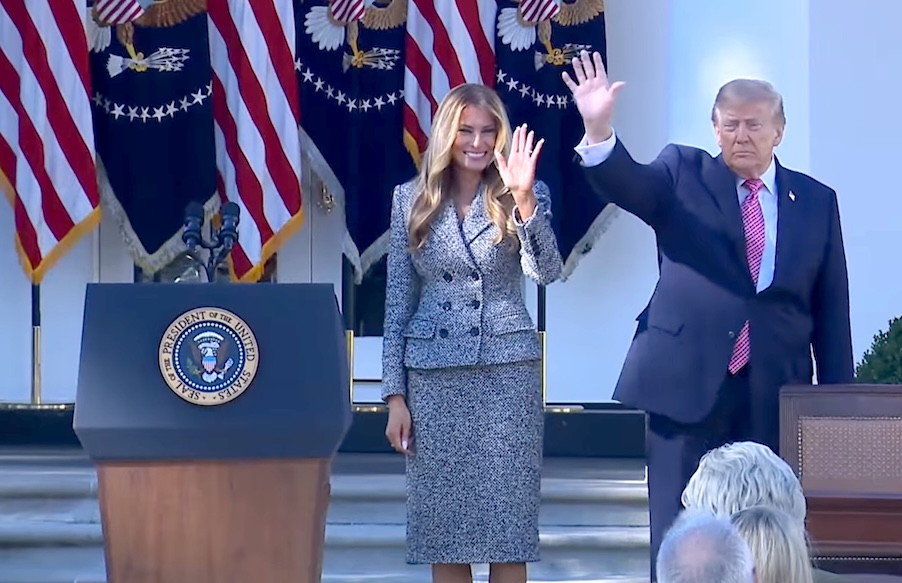
President Trump noted in remarks that many diseases and conditions that disproportionately affect women “remain chronically understudied.” According to the World Health Organization, studies have shown that gaps in medical research often shape how diseases that affect both sexes are treated. Women usually experience different symptoms, risks factors or treatment responses, yet much of the evidence used in medicine has historically been based on male bodies and experience,
For example, cardiovascular disease, which is the leading cause of death among women worldwide, according to the American Heart Association, women remain underrepresented in cardiovascular research, limiting understanding of how the disease affects them. For example, risk factors such as menopause and some breast cancer treatments, can affect women’s heart health. This has called for greater investment and representation in research, noting that
Cancer also present a global challenge as well. More than two million women are diagnosed with breast and cervical cancer each year, according to the International Agency on Research on Cancer. Where a woman lives and whether she can access screening, treatment and follow-up care can strongly influence whether she survives. IARC says proven, cost effective interventions exist but remain out of reach for many women in lower-income settings, urging for sustained investment across the cancer-care continuum.
Research funding is a major part of that concern. A 2021 peer-reviewed analysis of NIH funding found that among diseases that primarily affect one sex, funding relative to disease burden favored males in nearly three-quarters of cases examined. The study’s finding underscored why women’s health advocates pressed for research priorities and budgets that reflect women’s health needs.
Trump’s order revokes President Joe Biden’s March 2024 EO on women’s health research that sought to expand research and address evidence gaps, with $12 billion in funding, and a November 2023 memorandum that established a White House initiative on Women’s Health.
However, the latest order doesn’t specify a budget for the division or new research grants. In the White House’s fact sheet, it says implementation is subject to available appropriations, while HHS will cover the task force’s administrative costs. That leaves uncertain how much additional research the new structure will support and how quickly it might affect patient care.
The initiative comes as the Trump administration reshapes the NIH and the HHS, the federal agencies responsible for much of the nation’s biomedical research and health policy. The order sets new responsibilities for those agencies but doesn’t detail the staff or resources they will have to meet them.
The announcement also came amid concerns about shortages of estrogen patches used to treat menopause symptoms. Asked by Africa Bazaar about the issue and the request from the Democratic Women’s Caucus for HHS and the Food and Drug Administration to address the shortage, White House Spokesperson Allison Schuster said the new Task Force would “work to close critical research gaps and strengthen care for women across all stages of life.” She didn’t address the supply issue directly.
“Yesterday’s executive order is a powerful step toward confronting health challenges unique to women through the creation of the White House Women’s Health Task Force and the Women’s health Division at the NIH. Improving the health of all Americans is a top priority for President Trump and the First Lady and this task force will work to close critical research gaps and strengthen care for women across all stages of life, targeting some of the most widespread health conditions affecting them,” White House Spokesperson Allison Schuster said.
The initiative is also expected to leverage Super intelligence to advance women’s health research, and treatment.

