
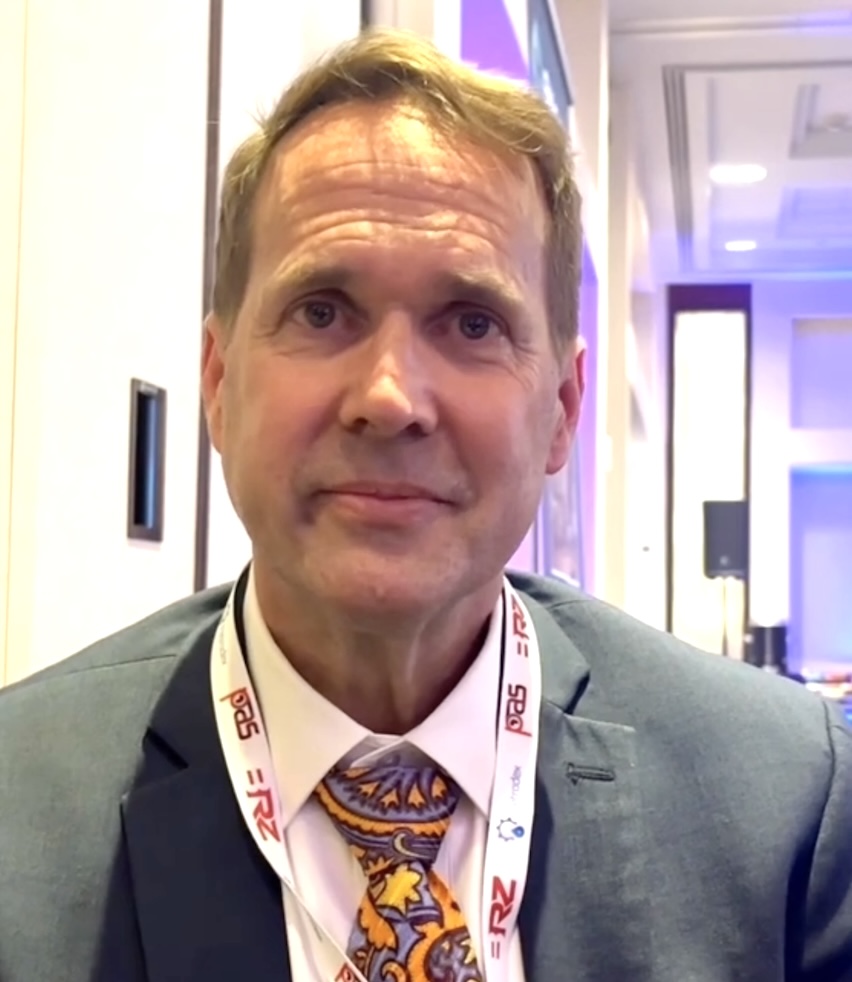
Sees energy, infrastructure, mineral supply chains as a broader commercial opportunity
INSIDE AFRICA | BUSINESS
Guinea has the bauxite. What it has been missing is enough reliable energy to turn that resource into something worth considerably more.
The government wants to move beyond exporting raw bauxite and further up the value chain, from bauxite to alumina and eventually aluminum. That takes a lot of electricity, along with the roads, railways and other infrastructure needed to support an industrial economy.
Troy Fitrell, the former U.S. ambassador to Guinea, sees the energy gap as part of a much bigger economic equation and where the opportunity begins.
After years of working across Africa on minerals, investment and commercial relations, he argues that Guinea’s mineral wealth can become a foundation for a broader economic development if the infrastructure is built around it.
“As Secretary Rice said, everything we do in life depends on energy,” Fitrell said in an interview with Africa Bazaar.
When Fitrell arrived in Guinea several years ago, he said, the country had ambitious plans but faced a basic constraint faced by most African countries: getting enough electricity onto the grid to make those plans commercially viable.
That is where West African LNG Group, a small American company, saw an opening. Its proposed bringing LNG into Guinea, building a thermal power plant and supply electricity to both the national grid and industries that require large amounts of power.
The need is particularly acute for Guinea’s bauxite industry.
“You can’t just export piles of red bauxite,” Fitrell said. “They want to be able to process it into alumina. They want to process it then on to the actual metal. But that requires massive amounts of power.”
The Guinean government has since signed a convention with West African LNG Group to develop LNG and power-generation infrastructure for the country’s mining and industrial sectors. The government sees the project as part of a broader effort to build the energy base needed to process more of Guinea’s mineral wealth at home.
“Guinea is blessed with minerals, and we need more energy to develop the country,” Minister of Energy Laye-Sékou Camara said during a panel discussion at the Powering Africa Summit in Washington DC . He called for more American industry to invest in Guinea’s energy sector and help expand the country’s capacity to process bauxite into alumina and, eventually, aluminum.
But Fitrell sees the opportunity as bigger than one LNG project or even Guinea’s mining sector.
If you build a road, railway, or power line for a mine, he argues, it does not have to stop there. The same infrastructure can connect farmers to markets, give businesses access to electricity and make it easier for new industries to develop.
“Sustained, thoughtful investment is where jobs and economic growth come from,” Fitrell said. In Guinea, that means getting the power right first. It also means thinking about what comes next after the mine.
In many African countries, he noted, mining accounts for a large share of economic activity while agriculture employs much of the population. Infrastructure built initially to serve mines can therefore have a second life.
“There is no future without agriculture," he said.
This is part of a bigger conversation now emerging around the U.S.-Africa commercial relationship as Congress and the Trump Administration work on modernizing African Growth Opportunity Act, commonly known as AGOA and extending it longterm.
For years, the relationship has often centered on Africa’s natural resources and the foreign capital needed to extract them. Fitrell said the bigger opportunity is building the commercial ecosystem around those resources—energy, transportation, digital infrastructure, processing and businesses that can grow alongside major projects.
His view is that development efforts have too often focused on individual projects without building the infrastructure and business environment needed to sustain them.
“The best way to encourage new business is to take care of the businesses you have,” he said.
In Guinea that means creating an environment where companies can invest for the long term, with predictable rules, transparency and functioning institutions.
A Different Calculation on Critical Minerals
Guinea also sits inside a much larger global supply chains shift unfolding as competition over critical minerals among major global powers heat up.
China dominates much of the world’s mineral processing. The U.S., Europe and other governments and companies are looking for ways to diversify supply and processing capacity. The concern is not simply where minerals are mined, but where they are processed and how dependent manufacturers become on a single source.
Guinea matters in that calculation. It has` what the market needs.
Bauxite is the primary ore used to produce aluminum, and the U.S. Geological Survey identifies Guinea as the world’s leading bauxite producer.
When ask about the competitions for critical minerals in Africa, especially between the U.S. and China, and whether the U.S. has missed a crucial opportunity in Guinea as well as across the continent, Fitrell argues the question is not whether the U.S. arrived late to Africa’s minerals sector. It is whether supply chains can become diversified enough to reduce dependence on any single country.
“The ability to have multiplicity, to have a diffuse supply chain, and to be able to control your own future, this is what matters,” he underscored.
This is where he sees a role for U.S. government participation. Washington can, in his view, help reduce the political and regulatory risks that can make private investors hesitant to enter large African infrastructure projects.
He points to the Lobito Corridor project as an example of the approach. The corridor is more than a railway, he said. It includes transportation, power, digital infrastructure and opportunities for agricultural development and processing along the route. The underlying idea is simple, he noted, infrastructure becomes more valuable when it connects different parts of an economy rather than serving a single mine.
Fitrell also believes the quality of investment matters as much as the amount, for African governments.
He points to the presence of African professionals in senior positions at American companies operating on the continent as an important part of that equation.
“Go into any American business anywhere on the continent and look at all the locals in senior positions," he said. “That’s the difference.”
From Digging to Tracking
Fitrell is now taking that supply-chain question a step further, into the private sector.
After retiring from government, he moved into the private sector and is now working at a fintech company focused on tokenizing minerals, creating digital representations of physical mineral production that can be tracked through the supply chain.
The idea is to bring greater visibility to a business that can become difficult to trace once minerals leave the mine. A digital record could allow governments, companies and buyers to track where minerals were produced, how much was produced and how they moved through the supply chain.
The idea is more tangible than it sound.
"Think about an iPhone, a car or an airplane, Fitrell said. “They all contain minerals that came from somewhere. But once those minerals move through supply chain, the end consumer usually has little idea where they came from.”
Tokenization, he believes, could eventually change that.
“Right now, this is a new and exciting industry,” he said. “But I predict that ten years from now, no one will be talking about tokenized minerals because they will all be tokenized.”
Whether that prediction materializes remains to be seen. But the push for greater traceability is already becoming part of a larger conversation around critical minerals and supply chains and reflects a wider effort to understand where strategic materials come from and how resilient the supply chains are that carry them to manufacturers.
The technology also intersects with a broader transformation underway in digital finance and payment system involving financial technology such as cryptocurrency, and stablecoins.
Many countries around the world are putting framework in place, including the U.S, which last year passed the GENIUS Act and is now working on passing the Clarity Act to provide rules for Fintech.
Fitrell maintains that the larger opportunity here is transparency. He also sees the implications extending beyond minerals, especially in Africa, which has one of the world’s largest young population. Most of the future workforce will come from Africa, many experts and research have noted, given that most of the rest of the world’s population are aging, including the U.S.
He describes a younger African generation as increasingly connected, ambitious and unwilling to accept the traditional boundaries of the relationship between Africa and the West.
He recalls African leaders telling him while he was in government that they did not want gifts. They wanted access to technology, investment and cooperation.
This distinction is central to how he sees the next phase of U.S.-Africa relations. The relationship, he argues, works best when it is commercial and reciprocal and this is where Guinea’s energy push presents an opportunity as well as challenge.
The challenge is turning that shared interests into projects that survive beyond the announcements.