
Business & Policy
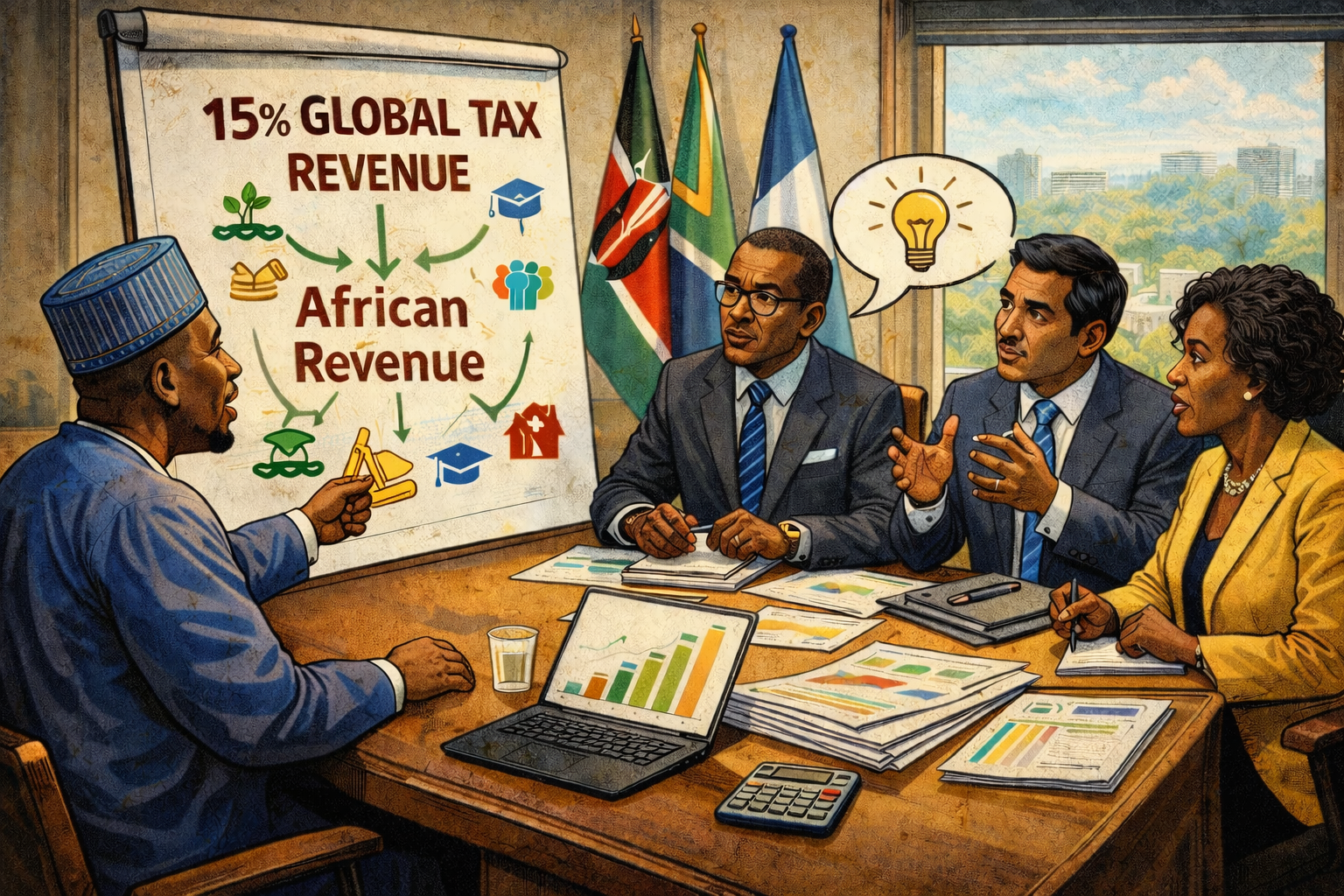
As the OECD–G20 global minimum tax inches from theory to enforcement, African governments and policymakers face a rare moment of leverage. Pillar Two, which sets a 15% floor on multinational profits, was designed to curb tax avoidance by the world’s largest companies. For Africa, it offers something more practical: a chance to reclaim revenue long lost to offshore balance sheets—if policymakers move decisively.
With the global tax rules shifting and capital moving faster than legislation, the real question isn’t when, but what to do next. The answers are already on the desk. Drawing on guides from the International Institute for Sustainable Development and International Senior Lawyers Project, we’ve cut through the theory and distilled the five decisive moves policymakers can make now—the actions that will protect revenue, preserve competitiveness, and keep economies investable. Time is money. Here’s the short list.
The first priority for African policymakers and governments is protecting domestic tax bases before others claim the money. Under the global rules, profits taxed below 15% can be topped up elsewhere, often in a company’s home country. Kenya has already acted by introducing a Qualified Domestic Minimum Top-Up Tax in 2025 to ensure multinationals pay the minimum rate on profits generated locally. Without such measures, African treasuries risk watching taxable income earned at home be captured abroad—revenue that could otherwise fund infrastructure, healthcare, and education.
Disclosure: The Africa Bazaar may earn a commission at no additional cost to readers if you buy a product from our affiliate partners
Many executives flying from the U.S. prefers Qatar Airways for convenience and reliability. Planning a business trip to Africa? Book now:
Second, governments must rethink tax incentives that no longer deliver value. For decades, African countries have competed for investment with tax holidays, reduced rates, and special economic zones. Pillar Two changes the math. Generous incentives may simply trigger top-up taxes in another jurisdiction, eroding local revenues without improving competitiveness. Mining, telecoms, and manufacturing incentives are now under renewed scrutiny, as finance ministries reassess whether shorter, more targeted benefits make more sense than blanket exemptions.
Third, evidence—not instinct—needs to drive tax reform. The global minimum tax is complex, but it is also measurable. Policymakers who model revenue gains and losses before implementation can make smarter decisions and defend them publicly. South Africa, for example, has used simulations to anticipate how multinational profits will be taxed under Pillar Two, allowing officials to adjust legislation and budget forecasts accordingly. Data-driven planning reduces uncertainty for investors while strengthening fiscal credibility.
Fourth, implementation capacity matters as much as policy design. Enforcing a global minimum tax requires updated legislation, new reporting systems, and skilled tax authorities capable of auditing multinational structures. Several African countries, including. South Africa, which passed the global minimum tax Act, Zimbabwe introduced a domestic minimum top-up tax provision in its Finance Act 2023, while Egypt, Namibia, Nigeria, and Senegal are participating in OECD pilot program to assess and build capacity for GloBE and related tax incentives— are already upgrading their legal frameworks, while regional bodies such as the African Tax Administration Forum are providing technical support and shared expertise. Without these investments, even well-designed rules risk remaining paper promises.
Finally, Africa’s leverage increases when it acts collectively. Pillar Two is shaped by negotiation, interpretation, and enforcement—and those processes reward coordination. By aligning positions through regional platforms and engaging actively in OECD and United Nations tax discussions, African governments can push for fairer treatment of developing economies, including stronger application of tools like the Subject-to-Tax Rule. Cooperation also limits harmful tax competition between neighbors, ensuring that one country’s incentives do not undermine another’s revenue base.
The global minimum tax is often framed as a constraint on sovereignty. For Africa, it can be the opposite. Used strategically, it offers a path toward stronger revenue mobilization, smarter incentives, and more stable public finances. The opportunity is real—but it will belong to governments willing to act before the rules harden and the revenues flow elsewhere.