
Policy shift reflects growing urgency to stabilize supply as global oil markets tighten
By Kemi Osukoya
ENERGY MARKETS & POLICY
Amid mounting strain on global energy markets and supply chains triggered by the escalating U.S.-Israel conflict with Iran, the White House has moved to ease domestic shipping constraints, announcing a 60-day waiver of the Jones Act—a century-old law that governs maritime trade between U.S. ports.
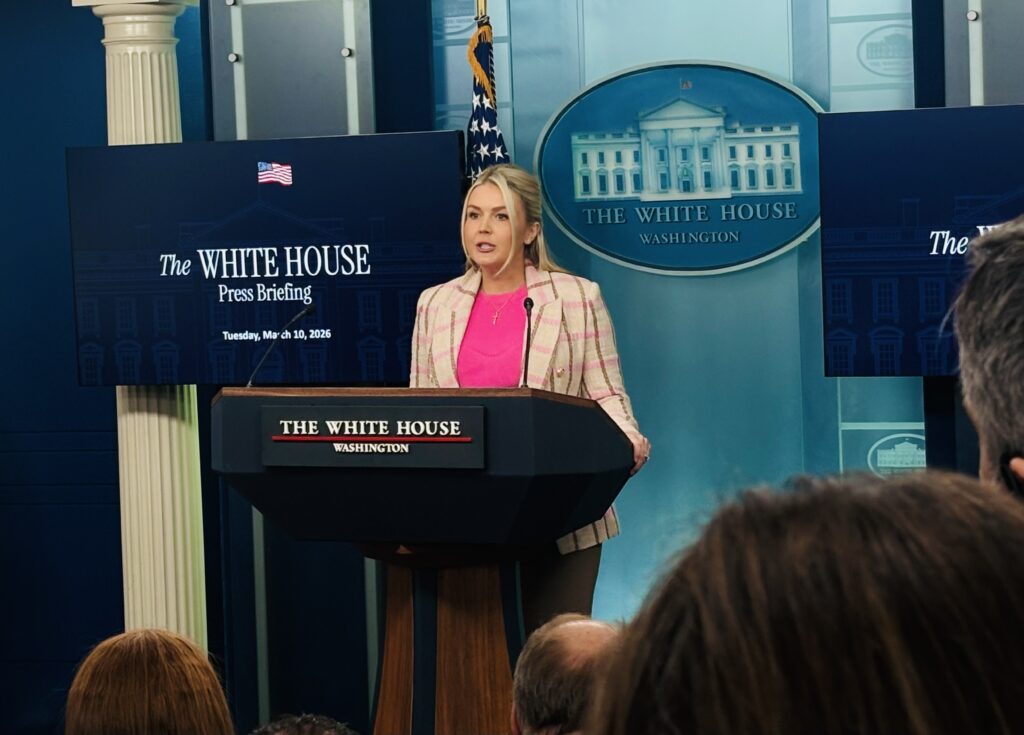
Formally known as Section 27 of the Merchant Marine Act of 1920, the law requires that goods transported between U.S. ports be carried on American-built, American-flagged and American-crewed vessels. The temporary waiver allows foreign ships to move energy products and other critical goods domestically, a step White House Press Secretary Karoline Leavitt says is aimed at keeping fuel and agricultural supplies flowing as global logistics networks come under pressure.
The move comes as the Middle East conflict continues to disrupt oil markets and shipping routes. Crude prices have surged above $100 a barrel in recent weeks, while tanker traffic through the Strait of Hormuz, a vital artery for global energy trade, has slowed sharply amid security risks. Several producers in the region have curtailed output, compounding supply concerns.
The Trump Administration has also taken steps to ease pressure on global oil supply. The Treasury Department‘s Office of Foreign Assets Control last week issued a temporary license to allow limited flows of Russian crude back into the market despite sanctions tied to the war in Ukraine. At the same time, major economies, including the Group of Seven and the International Energy Agency, jointly agreed to release of up to 400 million barrels from strategic reserves—one of the largest potential emergency interventions on record.
Shipping risks are rising in parallel. The International Maritime Organization this week is convening a two-day emergency talks as attacks on commercial vessels intensify in the Gulf. Secretary-General Arsenio Dominguez on Wednesday warned that roughly 20,000 seafarers remain stranded in the region, facing elevated security risks and mounting psychological strain, underscoring the growing human and operational cost of the war.
“I continue to monitor the situation closely and call for all shipping companies to exercise the utmost caution when operating in the affected region and to the extent possible to avoid passing through it,” the IMO’s Secretary-General remarked, adding that any attack on innocent seafarers or civilians shipping is totally unacceptable. “They must not become victims of broader geopolitical tensions.”
He urged all parties to work towards de-escalation of the conflict and to allow the crew members to leave the Gulf safely on board their ships. “This situation is unacceptable and unsustainable. Shipping has demonstrated time and time again how resilient it is but geopolitics are pushing the sector to the limit,” he stated.
Against this backdrop, analysts told the Africa Bazaar that the Jones Act waiver underscores a deeper structural tension in U.S. energy logistics. While the law has long been defended as a pillar of national security—designed to preserve a domestic merchant fleet capable of supporting military operations—critics argue it raises shipping costs and limits flexibility in times of crisis. The U.S. today operates fewer than 100 large oceangoing vessels compliant with the law, a fraction of the fleets controlled by global shipping powers.
The policy also has broader implications beyond the U.S. shores. By restricting domestic shipping, the law can make it cheaper to import energy than to move it within the country, distorting trade flows and reinforcing reliance on international transshipment hubs. Economists say such inefficiencies ripple across global markets, with indirect effects on developing economies, including those in Africa, that are already grappling with volatile fuel costs and fragile supply chains.
Industry groups and maritime stakeholders, however, have pushed back against the waiver. Maritime stakeholders warn that loosening the law risks displacing American workers and operators, arguing that its emergency provisions were designed for national security contingencies—not market intervention. They also note that the impact on fuel prices is likely to be marginal, given that domestic shipping accounts for only a small fraction of overall gasoline costs.
“Every vessel movement under this waiver must be publicly disclosed and justified according to federal law. We will be watching closely. We also reiterate that this waiver will not reduce gas prices. The maximum potential impact of domestic shipping on the cost of gasoline nationwide is less than one penny per gallon,” American Maritime Partnership told the Africa Bazaar over the phone.
Still, supporters say the administration’s decision reflects the urgency of the moment. With energy prices rising, supply chains under strain and geopolitical tensions escalating, policymakers in Washington are increasingly willing to deploy tools once considered politically untouchable. The risk, economists say, is that the current shock—layered on top of inflationary pressures stemming from the pandemic and the recent global tariff shocks—could entrench longer-term price instability if disruptions persist.