
AGRA, Atlas AI has formed a new partnership and is betting on data to help tackle food insecurity in Africa as well as make farming sexy for a new generation of young African farmers
Kemi Osukoya
April 8, 2019
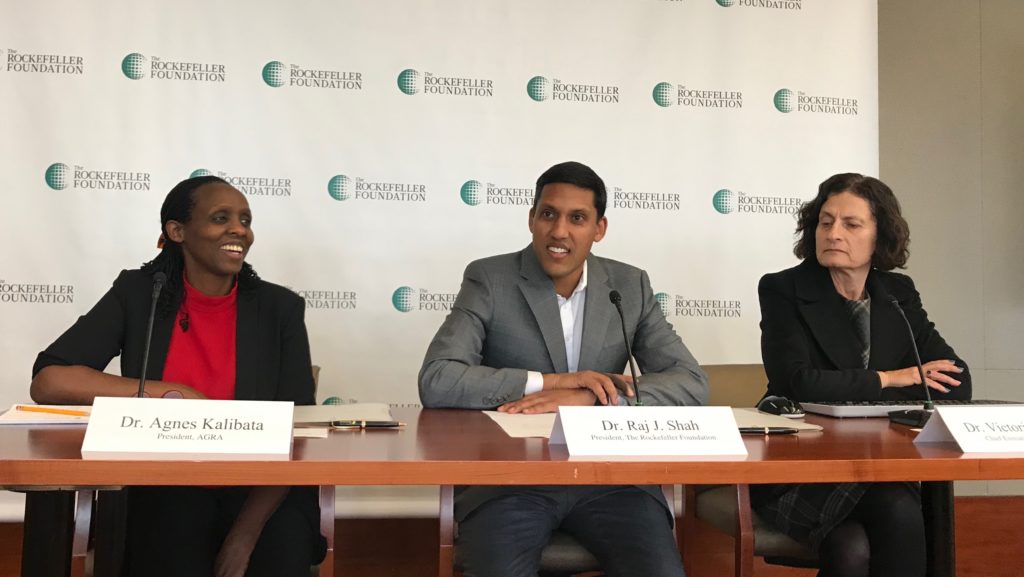
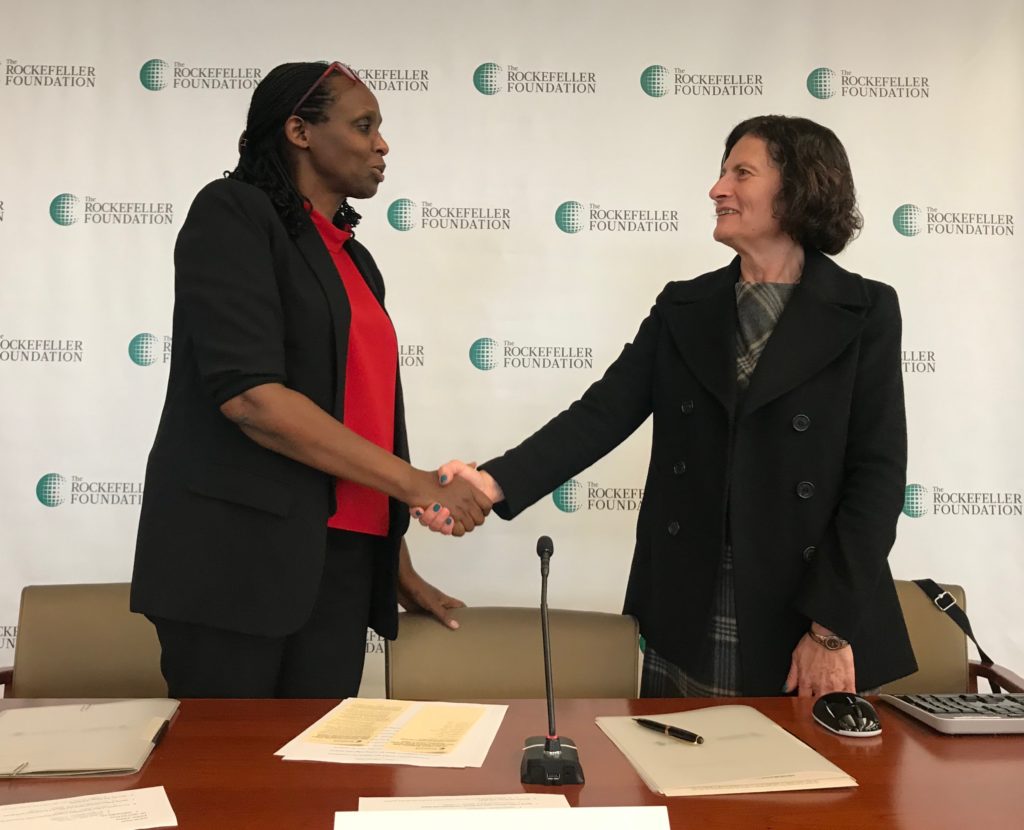
As the President of Alliance for a Green Revolution in Africa, Dr. Agnes Kalibata has spent years looking for the right solutions to help her solve the problems of hunger and the huge disparity in food security that she sees increasingly permeating her beloved African continent. Then she was introduced through the Rockefeller Foundation to Victoria Coleman, who runs Atlas AI, a company using machine learning and artificial intelligence to find solutions to public problems. Talk about a perfect business blind date ending up in a business marriage proposal—it was love at first sight for the two companies after their initial meeting and within months a partnership was formed between them.
The timing of the partnership between AGRA and Atlas AI couldn’t be more auspicious to help AGRA address Africa’s existential threats of food insecurity and climate change-related issues affecting farmers.
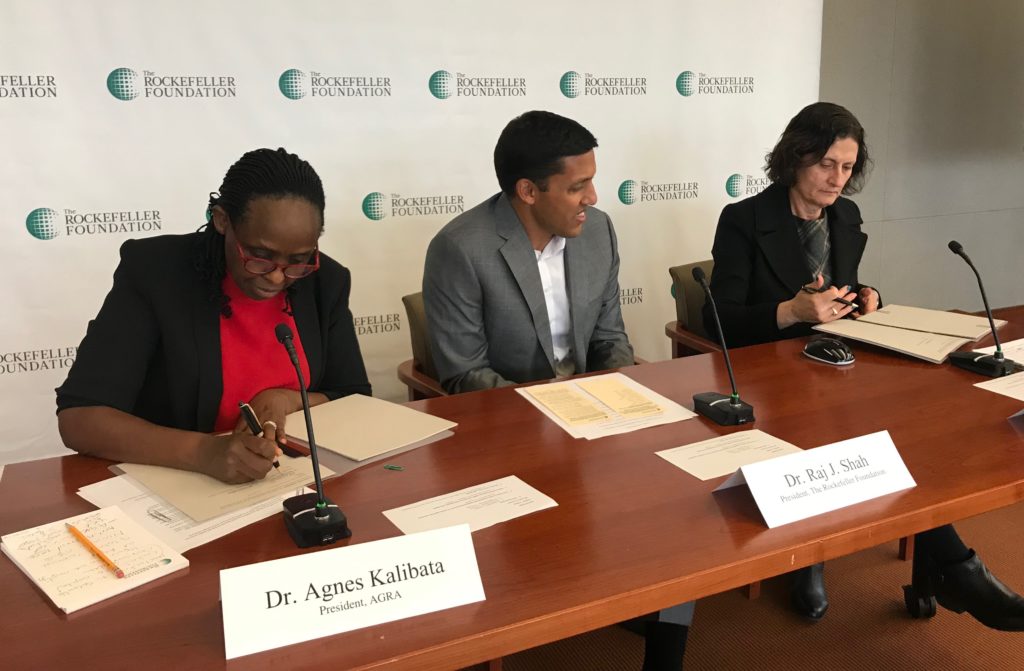
“We are looking forward to the partnership between AGRA and Atlas AI. Africa is the only continent now where data is not fully utilized, better to say underutilized. We have challenges around planning, I mean you can’t plan or develop if you don’t have sufficient info to help you design those products,” Ms. Kalibata told the Africa Bazaar magazine during the official Memorandum of Understanding signing ceremony at the headquarters of the Rockefeller Foundation in New York. “You know in [America] you wake up in the morning and know what the weather is going to be like but in Africa, we don’t know whether it will rain next week or next month and these are things that are very critical to agriculture that we manage. Today, Ethiopia is the only country on the continent, except for North Africa and South Africa, that is producing four to six metric tons of maize because it has collected data and understands its soils. They have done an extensive job and have amazing information solely based on data.”
Ms. Kalibata believes data is the remedy, the major formula that has been missing from Africa’s modern agriculture blueprint.
So much has been done in the last decades by AGRA to address hunger and food insecurity on the African continent. The organization, which was hatched during a Rockefeller Foundation board meeting two decades ago and birthed a decade later under the leadership of late former U.N. Secretary General Kofi Annan as the chairman, has been a vanguard of agricultural and green revolutions in Africa— moving farmers away from antiquated traditional farming methods and tools to a modern systematic approach of utilizing new agricultural technology, including biotechnology to expedite and improve the efficacy of agriculture and food production on the continent.
“AGRA was started to deal with the issue of hunger. At that time, Africa was the only continent in 2006 that had not achieved its green revolution. We still have it, but I want to believe that we are closer,” says Ms. Kalibata. “We want to use technology to help countries achieve a green revolution, better seeds, better improvement, good fertilizers, and within months, we started coming on board and started talking about access to markets, improved policies and now we talk about state capacity to deliver.”
When the Rockefeller Foundation embarked upon the green revolution about 20 years ago, the idea was to use agricultural technology to address hunger problems in Asia and Latin America. At the time, African nations had a relatively strong agricultural sector compared to nations in Asia and Latin America. While millions of people in Asia and Latin American nations were benefiting from the Foundation’s green revolution program, Africa’s agricultural fortunes began shifting into reverse causing a spike in child mortality, malnutrition, and hunger across the continent, and that led the Foundation to spin out the agricultural program into AGRA for Africa. The goal then and still is to advance agricultural productivity in Africa.
The talent in Africa is very incredible. When I was there I spent time with the youth, including an afternoon with some local technology companies that AGRA brought to the table, I was astounded by the depth of talents in Nairobi and Africa in general, says Ms. Coleman.
Betting on Data
“Today when we look at the frontier of science and technology, we believe data science, artificial intelligence, and machine learning are the tools that will transform humanity over time for better or for worse. The Rockefeller Foundation is proud to bring these two extraordinary institutions-AGRA and Atlas AI— together to put our thumbs on the scale to make sure their new tools of data science are used to help alleviate poverty, hunger, and malnutrition in Africa,” says Rockefeller Foundation President Dr. Raj J. Shah.
Atlas AI was founded a year ago at Stanford University with funding from the Rockefeller Foundation under the auspices of former Rockefeller Foundation board of trustee member and Econet Wireless Group founder and Chairman Strive Masiyiwa. Atlas AI, which uses satellite imagery combined with machine learning artificial intelligence to create very accurate datasets is emerging as a major player in efforts to revolutionize how data is collected and used by businesses as well as governments for navigation and remote sensing to aid sustainable development—an effort given new international urgency due to the existential threats posed by climate change. The company’s mission is to bring world-class AI to sustainable development. What it means by that is to provide valuable information and insights that will empower people, citizens to make the right decisions regarding their standard of living and a long and healthy life.
“We chose Africa as our starting point for a variety of reasons, one is because it’s big and we can impact many people, Second because of the needs. Despite all the increases in living standards and the incredible works that foundations like the Rockefeller Foundation have done in the last 60 years, gaps still remain,” says Ms. Coleman, the Chief Executive Officer of Atlas AI. “We also chose Africa because it’s growing. If we fast forward 20-30 years from now, the continent will be ballooning compared to what will happen in European nations or North America, so more people will be impacted in Africa.”
She added that the other reason why the company chose Africa is that it is hard on their AI technology. “The technology like ours works really well when you have lots of data and Africa is a place where you have very few data to train our data on, so we figure if it works in Africa, it will work everywhere else,” says Coleman. In this context, Atlas AI joins other American technology companies, including autonomous drone logistics companies like Zipline—another California company that has successfully piloted its drone technology in Africa to deliver health supplies to hospitals in Rwanda.
Successful partnerships such as the one with Atlas AI are what AGRA was built upon. The organization was established by the Foundation in partnership with the Bill and Melinda Gates Foundation as a co-donor. It is yet to be seen whether this new partnership will help remedy the hunger and tackle the food scarcity in African nations, AGRA’s past results however have proven that the organization is always at the cutting edge of new ideas and this time again, it may be on the right track. What underlines all of this is of course is nutrition, food security, and what underlines that is agriculture.
Digital technologies are bringing profound structural changes in all economic and non-economic realms, but we need not fall prey to technological determinism
Data technology is becoming a major component of policy-making and in addressing the challenges that societies face nowadays. As advanced machine-learning algorithms effectively mine enormous and rapidly growing stocks and flows of data, there is an emergence of a new factor of production – machine learning capital – and a new mode of innovation – machine-generated IP. This has profound impacts on how we measure the digital economy.
Last November, the International Monetary Fund convened a group of data scientists, economists, and representatives from the private and public sectors for an event at its headquartered in Washington DC to mull how data technology can be better used by governments, and institutions to positively impact societies around the world as well as how to prevent intrusions on privacy.
“Digital technologies are bringing profound structural changes in all economic and non-economic realms, but we need not fall prey to technological determinism. Data governance is the most important public policy issue of our time. Whoever controls the data, controls who and what interacts with it. Furthermore, any data collected can be reprocessed and analyzed in new ways in the future that are unanticipated at the time of collection and this has major implications for the global economy and for democracy,” said Jim Balsillie, former co-Chief Executive of Research in Motion, who spoke at the event. “It is essential to look at data governance as an integrated whole, because the exploitation of data generates a new feedback that modifies the behavior of the society and economy that generated the data in the first place.”
Ms. Kalibata and Ms. Coleman both agree that if used prudently and diligently, data technology can help African farmers leapfrog into the global markets in many ways by providing insightful information on how to address some of the challenges—such as climate change-related issues like drought, flood, and soil erosion—as well as opening up Africa’s markets to exports.
The internet has made information readily accessible for everyone to use. These days, it is very easy to find information about anything online and for most farmers in Africa, especially smallholder farmers, the internet has become indispensable for obtaining general information about crops as well as getting access to market information. However, this avalanche of information comes with a high price—one that poses a major challenge. One of the challenges that a lot of African farmers face with the avalanche of information is access to trusted information on market operations, and getting access to trusted market information can be very costly, financially, for most of these farmers. Fixing these problems is where Atlas AI comes in.
Reforms Fuel Hopes
In addition to its partnership with Atlas AI, AGRA continues to work with other donors and financial institutions, including the World Bank group,—which has designed a special program for African nations to deal with climate change such as building up resilience against climate impact. The World Bank is providing information and insight that AGRA needs to navigate the bureaucratic mechanisms, and interdependency of institutions. A collective effort and support of public-private partnerships are needed to address the threats of climate change in Africa as well as in doubling down in terms of resources and getting support from the governments to do the work as well so it will yield positive results. On this front, AGRA is building upon the political will and mechanisms that African governments have put in place as a declaration. In 2003, Heads of state in Africa agreed to set aside 10 percent of their budget for agriculture. The good thing about that is that 10 years later they realized they wanted to do more so they upgraded the declarations adding an addendum. One notable addendum to the latest declarations is that they make sure that progress is now trackable, and this is not just done by AGRA but also by other donor partners as well, including the African Development Bank.
Earlier this year, the AfDB, in partnership with the African Union Commission, Global Panel on Agriculture and Food Systems for Nutrition, and the Bill and Melinda Gates Foundation, jointly launched a new food security awareness tool that will help raise nutrition awareness and reinforce commitments from African governments to end hunger and malnutrition on the continent. The program, which is called Africa’s Continental Nutrition Accountability Scorecard, will track and provide data and a nutrition assessment tool that African governments can use to set a better policy agenda that will help address malnutrition and food insecurity, especially among children, pregnant women, and women.
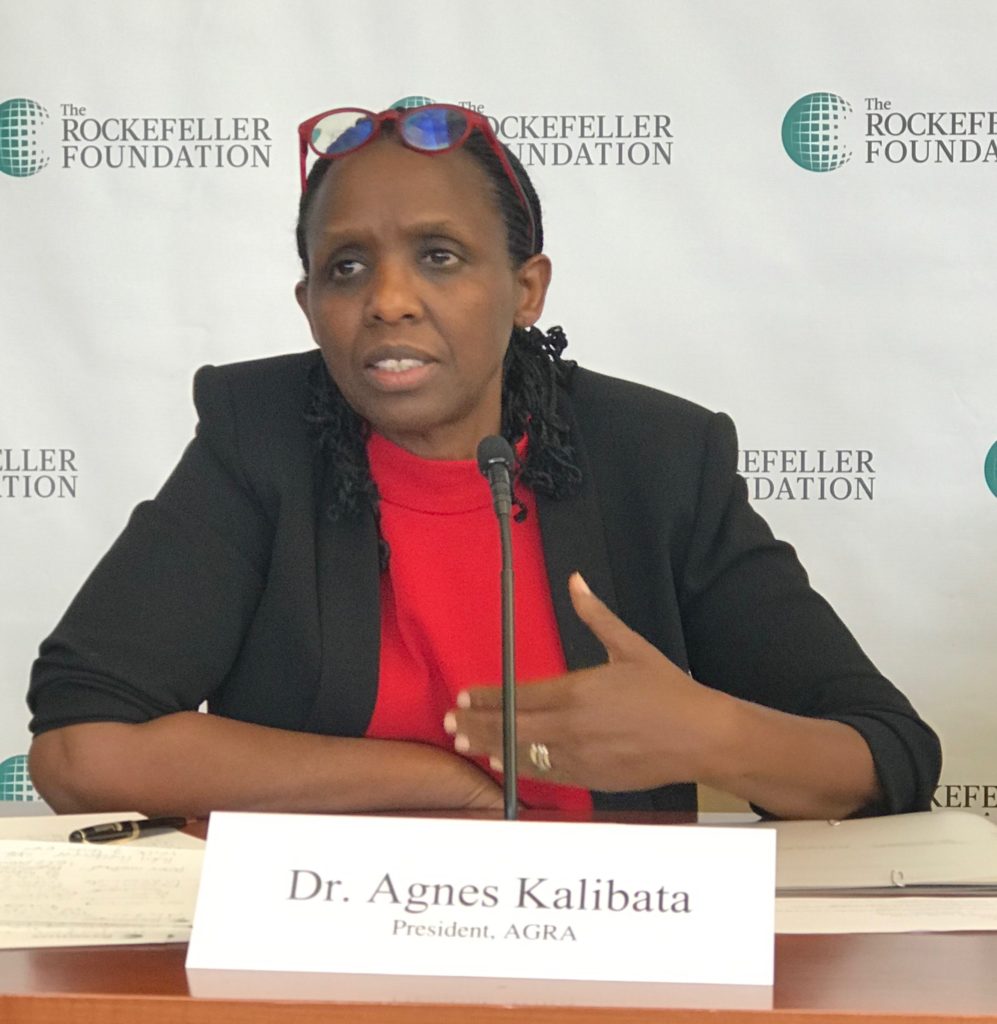
“Today, we use mobile telephones to do a lot of things, and technology allows us to know what diseases are where, how to track diseases, and when to communicate with scientists and this can be scaled up,” says Ms. Kalibata. “One of the conditions we are having is how Africa is all red on resilience. No single country is prepared for resilience and the ability to strengthen households, which is why we need to do something. The political will is right there, the farmers are ready and that’s where Atlas AI comes in. The ability to show data, who is moving forward and who is not—things like this will show us how to use this information to make better informed decisions.”
From that perspective, AGRA is looking to tap into Africa’s young population to take advantage of the young population’s technological knowledge and advancement, and how the youth use technologies in new ways to do business. “There are so many opportunities for us to fast-track and leapfrog on all the challenges and development that you see on the continent without going through the whole nine yards that everybody has gone through,” Kalimata responds when asked about how new technology is changing the traditional landscape of farming and agribusiness in Africa.
Generational Shift in Agriculture
In the last decade or so, as youth unemployment balloons in Africa, a huge number of young people have embraced farming as their main source of income, which might come as a bit of a surprise to people living outside of the African continent but not much of a surprised if you look at the demographic of the population living in Africa —75 percent of its population are under the age of 35 and while many of them are college graduates, only three out of each 10 youth that have obtained a college degree are employed, leaving the remaining seven unemployed. This is why AGRA has begun to shift its focus to the young farmers. With fifty percent of this new generation of farmers owning land, AGRA sees it as a huge opportunity to revamp agriculture and the green revolution in Africa using Atlas AI technology as a catalyst without having to invest in new agricultural training programs to educate farmers on how to use technology since most of these young farmers are technology literate.
“This is a huge opportunity for AGRA because [these farmers] want to use technology so we don’t need to go to universities to design a new curriculum or set up a new training program for them. What we need to do is we need to focus on how to empower these farmers by making this technology available for them to have visibility to what is going on in the rest of the world, to provide access to markets, information, inputs and access to capital and there’s so much we can do these days using the smartphone to build credible mechanism that will allow them to access financing from banks,” says Kalibata. She also points out that banks are becoming a bit apathetic in providing access to financing for smallholder farmers and will need to pay closer attention to make sure they don’t become another major obstacle for farmers in the immediate future.
Homegrown companies such as Hello Tractor in Kenya, Farm Africa in Uganda, and AgroMarketDay are pioneering better ways, using mobile apps, for farmers to access markets, or get the equipment they need at an affordable cost. Hello Tractor, a replica of Uber for African farmers, allows farmers to get equipment at an affordable cost. In addition, hydro-farming is taking root as an effective alternative to traditional farming by bypassing all the added infrastructure and land costs.
As it has done in the past, AGRA is not shying away from attracting controversy regarding its use of biotechnology to develop and improve agricultural production on the continent. Ms. Kalibata says the organization recognizes it needs to build up seed businesses as a base for the African food basket. When the organization was first established a decade ago, it counted about 10 local companies that sell seeds on the continent. Currently, there are more than 110 local businesses that are producing seeds across the 18 countries where AGRA is presently working. With the right policies in place, seed manufacturing has the potential to increase but first, governments have to address the major barriers hindering the seed business from expanding. On the other end, AGRA notes that it considers biotech as sovereign to countries and says countries have to define their biotech environment and put in place laws that will guide the biotech and policy that will govern that, and decide whether they want to do it or not do it, and if they want to do it, there’s way to get it done. It says governments can learn from Ethiopia’s use of seeds to reinvigorate its agriculture sector in the past decade.
However, the organization says its current main focus is using data technology to empower farmers to ensure that what is already being produced in Africa can increase as well as increasing access to those seeds.
“The talent in Africa is very incredible. When I was there I spent time with the youth, including an afternoon with some local technology companies that AGRA brought to the table, I was astounded by the depth of talents in Nairobi and Africa in general,” adds Ms. Coleman. “The 7 out of 10 people that don’t have jobs, that’s a huge problem staring us in the face. Companies like ours or organizations like AGRA that collect data that’s available, this is a lifeblood for innovation for these people. In the continent, mobility of broadband jumped a generation of technology and didn’t need land infrastructure and I believe on this one we can do the same with data because no matter how many challenges governments have around data, I believe that maybe by making data accessible and giving it to the people versus the intermediaries, we can now explore a complete new generation of innovations.”
Ms. Coleman states that there is no reason why data like the one her company produces is not available on the mobile phone in the Department of Agriculture. “Why do they have to go through the government or through an organization like AGRA if somebody can innovate and take the data from us and sell it to them. I am actually very optimistic seeing the talents and the energy and seeing the problems as well as the solutions that we have now, it’s a very opportune time for all these elements to converge. I’m not a forecaster, but if we could see 10 years from now, we’ll be having a different conversation about how innovation is taking hold on the continent.”
Ms. Kalibata, a former Minister of Agriculture in Rwanda before she was chosen to lead AGRA, says the biggest lesson she took away from her experience in revamping and managing the upwardly East African nation’s agriculture sector is that data is to government’s policy making as water is to a body. “Data is as important as water to a body. In Africa, we don’t have enough data and because of that, we can’t plan or do anything. It’s very difficult not to have data, governments struggle to stay on top of planning at a very expensive rate and are filled with difficulty. It’s hard to trust a lot of data that is coming out these days where it is full of errors, so my interest is right there—how can we fix that data problem so governments have the opportunity to start working with what is real and stay on top of planning,” Kalibata says.